

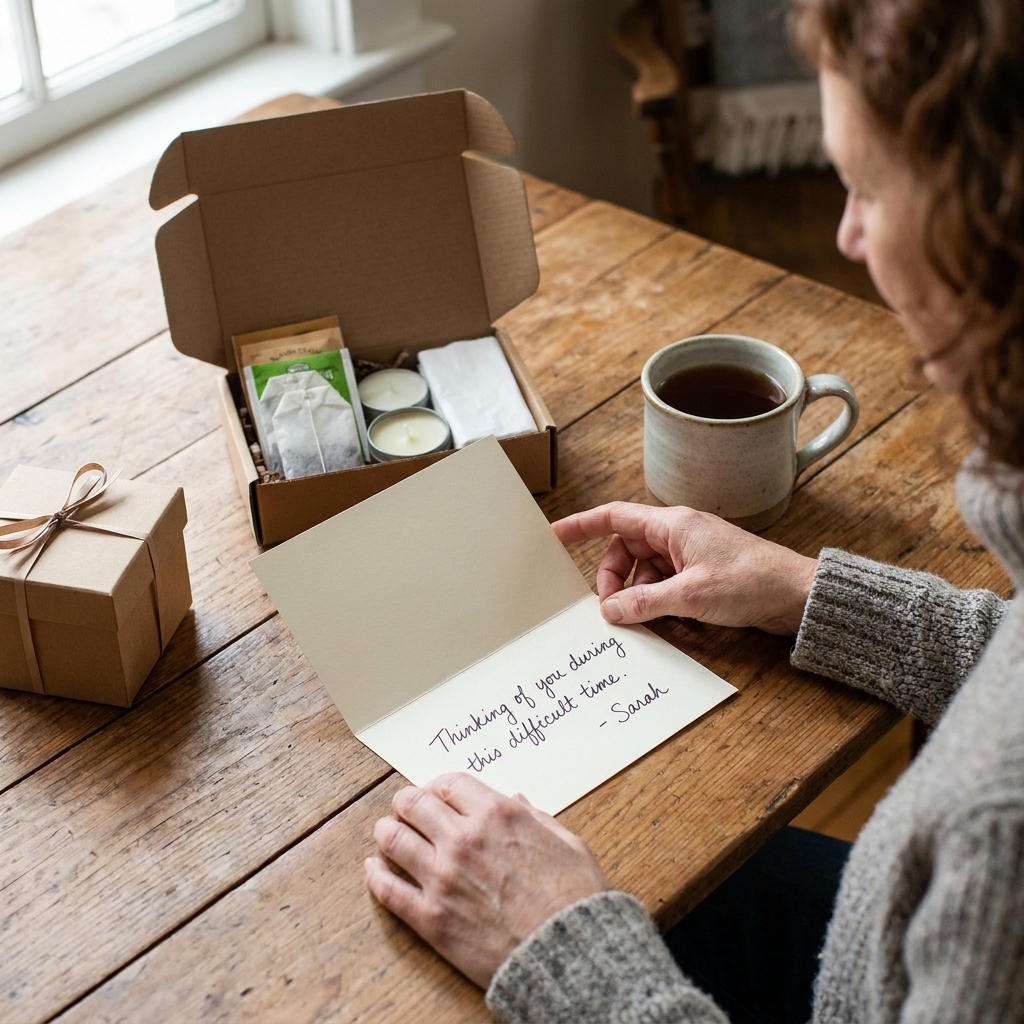
I have written a lot of tiny notes that had to carry a lot of weight. The kind you tuck into a care package with tea bags and a soft blanket. The kind you tie onto a memorial ornament or slide into a condolence card when there is nothing truly “enough” to say.
And in those moments, word choice matters. Not because you need perfect language, but because the wrong word can accidentally sound distant, overly certain, or a little too polished. Two words that cause the most last-minute second-guessing are sympathy and empathy.
The simplest difference
Here is the distinction I keep in my head when I am standing over a card with a pen hovering in midair:
- Sympathy is care from the outside. You recognize someone’s pain and you feel for them.
- Empathy is care from the inside. You try to understand what their pain feels like, and you sit with them in it.
Both are compassionate. Both can be appropriate. The difference is the stance you take as the writer.
What “sympathy” means
Sympathy is about noticing someone’s hardship and responding with kindness. The word has roots that point to “feeling with,” but in everyday use it more often lands as feeling for someone without claiming you share the same experience.
In a message, sympathy often sounds like:
- “I’m so sorry for your loss.”
- “My condolences.”
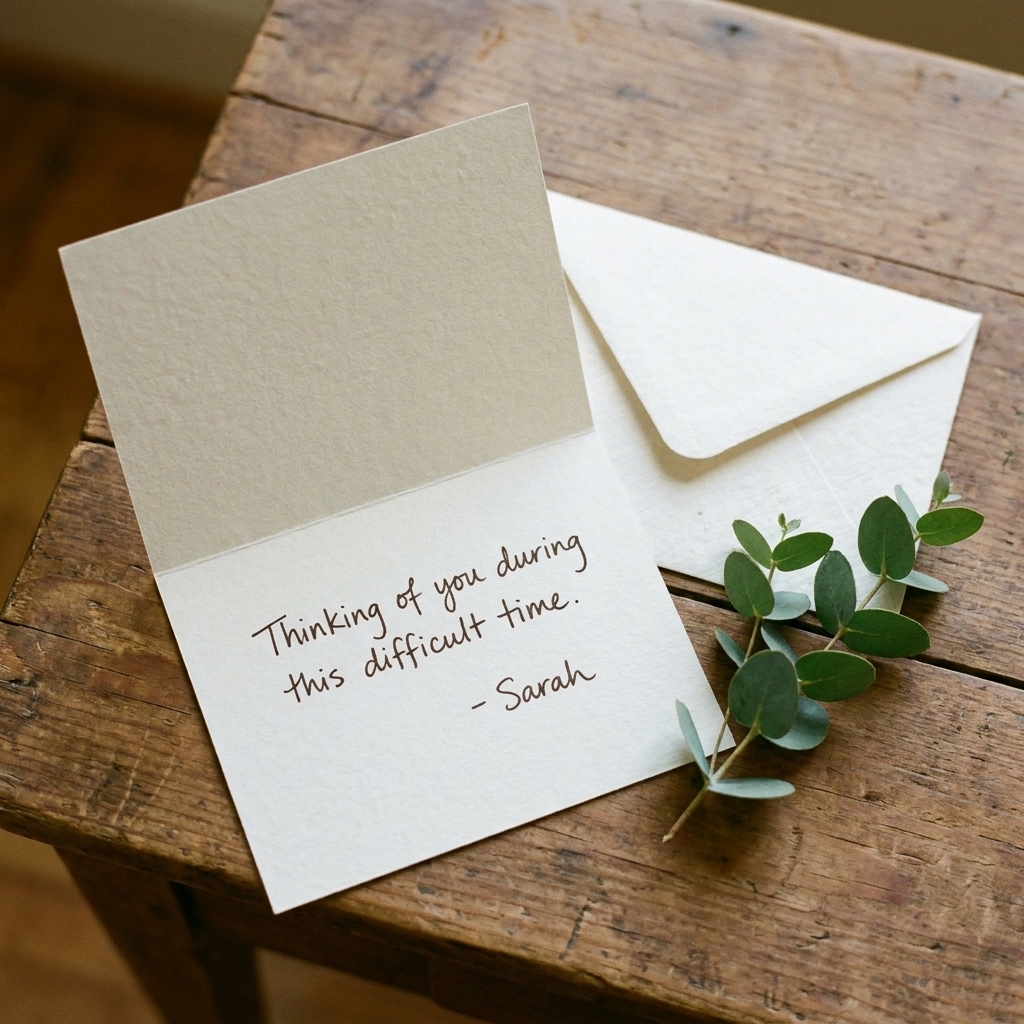
- “Thinking of you during this difficult time.”
- “I’m sorry you’re going through this.”
What it signals: “I see that you are hurting, and I care.” You do not have to claim you understand the experience firsthand. You are not centering yourself. You are simply offering respect and warmth.
This is why sympathy is often the safer default for grief, memorial crafts, and condolence gifts.
What “empathy” means
Empathy means the ability to emotionally understand what someone else is feeling. It is “I can imagine that from the inside,” not just “I feel bad that happened.”
Empathy language often sounds like:
- “I can only imagine how heavy this feels.”
- “I’m here with you in this.”
- “That sounds incredibly painful.”
- “You don’t have to carry this alone.”
What it signals: “I’m trying to understand your experience, and I’m staying present with you.”
A small risk with empathy: if you phrase it as certainty, it can feel presumptuous, especially in grief. “I know exactly how you feel” is the classic example. Even when you have been through something similar, their version of it is still their own.
Which word fits a care package?
Most care packages fit into one of two emotional categories: comfort for a hard season or comfort in grief. Here is how I choose.
Use “sympathy” for loss
If your package, card, or handmade item is connected to a death, miscarriage, pet loss, or any kind of memorial, sympathy is usually the best label and the steadiest tone.
- Sympathy care package
- With sympathy
- Our deepest sympathy (more formal)
These phrases are widely understood, and they do not pressure the recipient to respond or “feel better.”
Use empathy language for hardship
If the situation is not primarily about bereavement, empathy can be a beautiful fit: chronic illness, burnout, a tough diagnosis, infertility treatments, divorce, job loss, caregiving exhaustion.
In these cases, empathy language helps you sound less like a formal observer and more like a steady person beside them.
Relationship matters
The closer you are, the more “inside” language you can usually use. For a coworker, neighbor, or someone private, sympathy and simple support can feel more comfortable. For a best friend or sibling, gentle empathy can feel like love in sentence form.
What to write
Small-format writing is its own craft. You have room for one sentence, maybe two. Here are options that stay human and useful.
Short sympathy messages
- “With sympathy and love.”
- “Holding you in my heart.”
- “I’m so sorry for your loss. I’m here.”
- “Remembering them with you.”
- “May you feel supported and surrounded.”
Short empathy messages
- “I’m thinking of you, truly.”
- “This sounds like a lot. I’m here with you.”
- “No need to respond. I just wanted you to feel cared for.”
- “Wishing you rest and relief.”
- “One day at a time. I’m with you.”
Get-well notes without a timeline
“Get well soon” can feel too breezy for long recoveries. If you want warmth without accidentally setting a deadline, try:
- “Wishing you steady healing.”
- “Hoping today brings a little more comfort.”
- “Sending care for the long haul.”
Optional faith or secular tone
If you share a faith tradition, a simple line like “You are in my prayers” can be genuinely comforting. If you are unsure, or you want to keep it secular, “You have been on my mind” or “Holding you close in thought” keeps the warmth without assumptions.
Quick decision guide
If you are stuck between sympathy and empathy, ask yourself:
- Am I acknowledging a loss? Choose sympathy.
- Am I supporting someone through an ongoing, complicated, or unseen struggle? Consider empathy language.
- Do I truly know what this feels like for them? If not, avoid “I understand.” Try “I won’t pretend to know how this feels, but I’m here.”
- Is the recipient private? Sympathy often feels less intimate, which can be more comfortable for some people.
Using both naturally
In real life, many of the best messages blend the two: sympathy to acknowledge the pain, and empathy to offer presence.
Here are a few natural combinations that work well in care packages:
- “I’m so sorry you’re going through this. I’m here with you.”
- “With sympathy and steady support, one day at a time.”
- “I don’t have the perfect words. I just care about you, deeply.”
That last line is one I come back to often. It is honest. It does not overclaim. It still comforts.
Common missteps
“I know exactly how you feel.”
Try instead: “I can’t fully know how this feels, but I’m here.”
“Everything happens for a reason.”
Try instead: “This is unfair, and I’m so sorry.”
“Let me know if you need anything.”
This is kind, but it puts the work on them.
Try instead: “I’m dropping off dinner on Tuesday, unless you’d rather I didn’t.”
“Be strong.”
Try instead: “You don’t have to be strong with me.”
Labels for handmade gifts
If you sell or share handmade goods, you may need a simple product label or description. Here are clear options that match the emotional tone:
- Sympathy gift (broad, widely understood)
- Condolence gift (slightly more formal)
- Bereavement care package (direct, appropriate for grief support)
- Thinking of you care package (flexible for illness, stress, tough seasons)
- Comfort gift (warm, not situation-specific)
A note on wording: “Empathy” is more common as a tone than a label. Most people do not write “with empathy” on a tag, even when the message itself is empathetic. For non-bereavement support, tag-friendly options that read naturally are:
- “Thinking of you.”
- “Here for you.”
- “A little comfort for today.”
If you want more help with tiny-space wording, the principles in Write Clear Words for a Small Sign translate surprisingly well to gift tags and small card inserts.
FAQ
Is sympathy less caring than empathy?
No. Sympathy can be deeply caring. It is simply a different angle: you are offering compassion without stepping into their internal experience.
Is it okay to say “empathetic” or “empathic”?
Both exist. Empathetic is more common in everyday writing. Empathic often appears more in academic or clinical writing. For a care package note, I would pick “empathetic” if you need the adjective at all, but most of the time you can just show empathy in the sentence.
What is best for a memorial ornament or memory quilt tag?
Go with sympathy language, and keep it simple and steady: “With sympathy,” “In loving memory,” or “Remembering with you.” If you want more wording ideas like that, you may also enjoy browsing Word Meanings for related nuance questions.
A final note
When someone is hurting, the goal is not to sound eloquent. The goal is to sound safe. Sympathy and empathy are both safe when they are honest.
If you are writing from a respectful distance, choose sympathy. If you are offering steady presence in a hard stretch, lean into empathy language. And if you are still unsure, a plain sentence like “I care about you, and I’m here” rarely steers you wrong.