

My favorite garden signs are the ones that feel like a small promise you make to yourself. Not “TOMATO” in perfect block letters (though I love a crisp block letter), but a phrase that remembers why you planted anything in the first place. A vegetable patch is practical, yes, but it is also hope with dirt under its nails.
Below are 15 thoughtful phrases that work beautifully on wooden row markers, stakes, and little fence-hung slats. I kept them short on purpose, since outdoor signs need to be readable from a few steps back, even when the basil has decided to spill into the path.
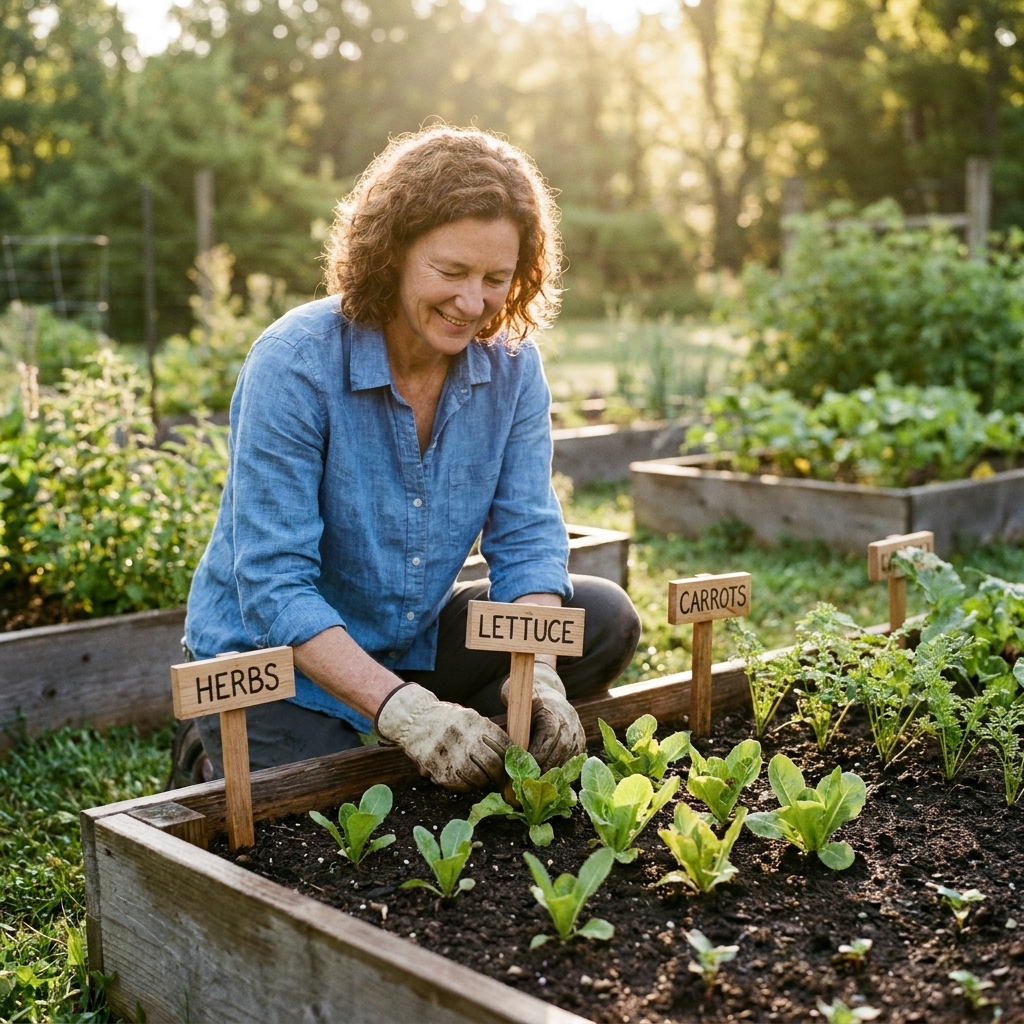
15 phrases for row signs
Mix and match these with your crop name, or use them as the main message when you want the whole row to feel like a tiny chapter in your garden story. A few of these are especially good as a second line under the crop name, since they are more mood than label.
- Planted with patience.
- Grow slow. Grow steady.
- Good things take root.
- Let the soil teach you.
- Water. Wait. Wonder.
- Sun-fed and grateful.
- From seed to supper.
- Tended with care.
- Small steps. Real harvest.
- Eat what you grow.
- Hands in the dirt, heart at home.
- Fresh is a feeling.
- Choose kindness. Plant something.
- May this row feed someone.
- Come back in a week.
If you want a deeper vocabulary angle for the feeling you are after, my Sign Ideas guide and Quotes and Sayings guide can help you dial in tone, from whimsical to reverent.
Crop add-ons
If you have room for two lines, I love pairing a thoughtful phrase with a crop-specific wink. Here are a few that paint nicely and feel at home in a vegetable garden.
Tomato
- Worth the wait.
- Vine-ripened hopes.
Carrot
- Rooting for you.
- Grow down, glow up.
Lettuce and greens
- Pick again soon.
- Cut and come back.
Beans and peas
- Climb toward the light.
- Little pods, big reward.
Squash and zucchini
- Give it space.
- Check daily.
Herbs
- Brush past gently.
- Snip and savor.
These are especially sweet for shared gardens, kids’ plots, or community beds because they communicate care without sounding bossy.

Readability outdoors
Outdoor signs have two enemies: distance and weather. A phrase can be gorgeous and still fail if it is too thin, too long, or too cramped.
My layout formula
- Top line: crop name in simple caps (TOMATO, BEANS, KALE).
- Bottom line: a short phrase (2 to 5 words) in a friendlier script or smaller print.
If you are hand-lettering and want a little help making longer phrases fit without shrinking the text into toothpicks, you might like how to write clear words for a small sign.
Spacing tips that matter
- Use fewer words than you think. Outdoors, short reads as confident.
- Keep thick strokes. Thin upstrokes disappear first after sun and rain.
- Leave breathing room. I do a quick readability test from about three feet away and adjust until it reads cleanly at a glance.
- Avoid fussy flourishes. Swashes can get visually muddy once dirt and weather enter the conversation.
If you are cutting stencils instead of painting freehand, the lettering principles are the same. You can borrow a lot from my Cricut lettering guide, even if you are using acetate, cardstock, or painter’s tape as your stencil material.
Color and contrast
If you want your sign to look charming and actually do its job, contrast is your best friend. My simplest rule is this: light background, dark letters, and not too many colors.
- High contrast wins. Black or deep green on a pale background stays readable even in harsh midday light.
- Limit the palette. Two colors plus bare wood is usually enough.
- Go bigger than feels polite. Outdoors, slightly oversized letters look confident instead of loud.
Materials and longevity
A row marker can be precious and still be built like it expects weather. If you want your signs to last more than a brief, lovely season, a few basics make a real difference.
- Choose a forgiving wood. Cedar and redwood handle moisture better than many soft pines, but any wood lasts longer with good prep.
- Sand the face. A quick scuff-sand helps paint grab and keeps brush lettering from skipping.
- Prime if you want staying power. Primer helps reduce tannin bleed and peeling, especially on raw wood.
- Round the sharp edges. Slightly softened corners are less likely to chip and they hold sealer better.
- Mount a little higher than you think. The closer your letters are to splash zone, the faster they get polka-dotted with mud.
For paint, craft acrylic can absolutely work, especially for a season or two, but it varies a lot by brand and it tends to fade faster in full sun. If you want maximum durability, exterior house paint, porch and floor enamel, or other exterior-grade paints usually hold up longer.
Whatever you use, let your paint cure before you seal it. A practical window is 24 to 72 hours, or whatever the label recommends, and longer if your paint is thick or the weather is humid. Then topcoat with an outdoor-rated sealer for UV and water resistance.
Thoughtful, not precious
Thoughtful garden wording usually lands in one of these lanes:
- Care language: tended, nourished, patient, gentle.
- Time language: wait, season, slow, steady, again.
- Home language: table, kitchen, feed, gather, share.
If you lean toward “home” wording, you might also enjoy 12 words that mean home and belonging. I find that list is a great springboard for garden signs because gardening is, quietly, a kind of belonging practice.
Mini FAQ
Should I put the crop name or a quote on the sign?
If the sign’s job is organization, put the crop name first and add a short phrase beneath it. If the sign’s job is mood, use the phrase alone and place it at the start of the bed.
What kind of paint holds up best?
For long-lasting signs, exterior-grade paints tend to outperform basic craft acrylics in sun and rain. Craft acrylic can still be a good choice for quick, cheerful markers, especially if you prep the wood, let the paint cure, and finish with an outdoor-rated clear sealer.
How long should the phrase be?
For a row stake, I like 2 to 5 words. For a longer slat sign mounted to a short post, 6 to 9 words can still read cleanly if you split it into two lines.