

I have a soft spot for housewarming gifts that do not pretend a new home is already finished. A framed cross-stitch feels perfect for that in-between season. The boxes are still half-open, the spice drawer is chaos, and yet you can hang one small, steady sentence on the wall and let it do its quiet work.
When you are choosing words for a housewarming cross-stitch, I like to think in layers: shelter (the physical place), comfort (the feeling), and belonging (the people, memories, and identity that make a space matter). Below are 12 words that carry those layers in different proportions, plus practical notes on what each one implies when it is stitched and given as a gift.
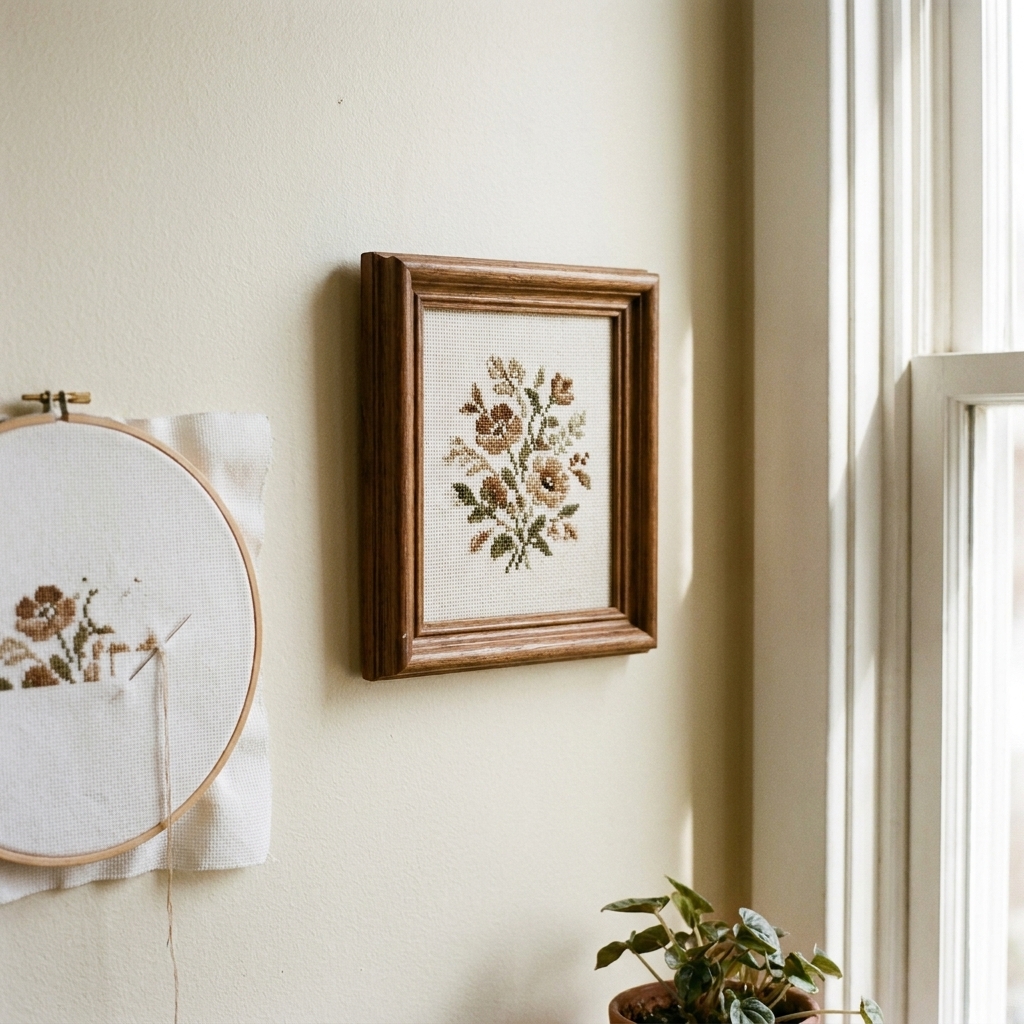
How to pick the right word
- Match the word to the moment. A brand-new homeowner might love “haven” or “welcome.” Someone rebuilding after a hard year might prefer “sanctuary” or “refuge.”
- Decide how personal you want to be. “Hearth” and “homestead” feel storybook and specific. “Home” and “belonging” are universal and direct.
- Check the vibe of the house. Minimal modern spaces often suit simple words (home, welcome, belonging). Rustic, cottage, or vintage spaces can carry more old-fashioned terms (hearth, homestead, dwell).
- Stitchability matters. Shorter words are easier to center and finish cleanly. Longer or trickier words can still work if you plan the layout first.
If you want help making short phrases feel intentional on a small piece, you might like Write Clear Words for a Small Sign. It is sign-focused, but the same clarity rules apply to cross-stitch.
12 words that mean home and belonging
1) Home
Core meaning: A place of lived-in safety and familiarity, often tied to identity.
What it communicates as a gift: Simple, generous affirmation. It is hard to misread “home.”
Cross-stitch note: Because it is so short, you can elevate it with texture: a chunky font, a small border, or a tiny motif (key, roofline, simple vine).
2) Hearth
Core meaning: The area in front of a fireplace and, by extension, the warmth and center of a household.
What it communicates as a gift: Old-fashioned coziness. It suggests comfort, shared meals, and gathering.
Cross-stitch note: “Hearth” pairs beautifully with simple imagery like a small flame, a mug, or a loaf of bread, but it also stands on its own as a single word.
3) Haven
Core meaning: A safe place, especially from stress, noise, or danger.
What it communicates as a gift: “May this home protect you.” Tender, but not overly emotional.
Cross-stitch note: Great for a bedroom, reading nook, or entryway. It fits modern decor well.
4) Sanctuary
Core meaning: A protected place set apart for peace, rest, or refuge. It can have spiritual or solemn undertones.
What it communicates as a gift: Respect for privacy and restoration. Especially meaningful for someone creating a calm home after a hard season.
Cross-stitch note: It is a longer word, so chart it before you start. If it feels tight on one line, split it cleanly across two lines rather than squeezing the letters.
5) Refuge
Core meaning: Shelter from difficulty, harm, or overwhelm.
What it communicates as a gift: Support and protection. Quietly powerful.
Cross-stitch note: This word can feel emotionally loaded for some people. If you are not sure it fits their story, place it in a more private spot (office, bedroom) or choose “haven” for a lighter feel.
6) Welcome
Core meaning: A warm invitation, a sense of being received with kindness.
What it communicates as a gift: Hospitality and openness. It celebrates new beginnings without pressure.
Cross-stitch note: This is an entryway classic for a reason. To make it feel less generic, add one small detail, like a simple wreath border.
7) Belonging
Core meaning: The feeling of being accepted and fitting somewhere, socially and emotionally.
What it communicates as a gift: A big-hearted wish: “May you feel at home here.”
Cross-stitch note: Because it is longer, it often looks best in a slimmer font, or split across two lines with generous spacing.
8) Kinship
Core meaning: Connection, family likeness, or chosen-family closeness.
What it communicates as a gift: Togetherness and community. Especially sweet for roommates, couples, or close friends buying a place together.
Cross-stitch note: “Kinship” is distinctive without being obscure. A tiny motif can be cute, but the word is strong on its own.
9) Nest
Core meaning: A small, cozy dwelling place. It suggests softness, care, and building a life piece by piece.
What it communicates as a gift: Cozy and slightly playful. It can nod to starting a family, but it does not have to.
Cross-stitch note: Short, sweet, and easy to center. Works beautifully with a tiny sprig, egg, or simple circle border.
10) Abode
Core meaning: A dwelling or home. More formal than “home,” and sometimes used with a wink.
What it communicates as a gift: A little witty, a little classic. “New abode” has a storybook feel without being precious.
Cross-stitch note: If your recipient likes wordplay, “abode” is a great alternative to “home” that still reads instantly.
11) Homestead
Core meaning: A family home with a sense of land, roots, and self-sufficiency. It often evokes farming or long-term, put-down-roots living, and in some contexts can carry historical “settlement” associations.
What it communicates as a gift: Rootedness and long-term building. It feels especially right for a first house, a fixer-upper, or anyone dreaming of staying put.
Cross-stitch note: Plan your margins. “Homestead” can look lovely slightly arched, or balanced with a small house silhouette or botanical border.
12) Dwell
Core meaning: To live in a place, and also to linger thoughtfully. It has a poetic, reflective tone.
What it communicates as a gift: Permission to settle in. Not just to occupy space, but to be present in it.
Cross-stitch note: “Dwell” is striking as a single word. It can also anchor a short phrase like “Dwell in peace,” but even alone it feels intentional.
Quick pairing ideas
- Modern, minimal: Home, Haven, Welcome, Belonging
- Cottage or vintage: Hearth, Abode, Homestead, Dwell
- Quiet and restorative: Sanctuary, Refuge, Haven
- People-focused: Kinship, Belonging, Welcome
Small stitching tips
- Choose one strong alphabet. If the word carries the emotion, keep the typography steady and readable.
- Give it breathing room. Centering and margins matter more than fancy flourishes.
- Let color do one job. One accent color (a single letter, a tiny heart, a border) can make it feel like a gift, not just practice cloth.
- Finish with intention. A simple frame, a hoop finish, or a neat backing turns “I stitched this” into “I made this for you.”
If you like the simplicity of a single word but want it to feel a little more anchored to the new home, add one quiet line underneath: an “est.” year, a move-in month and year, or even the street name. The trick is restraint. Keep the add-on smaller, lighter, and centered so the main word still does the talking.
For more word-focused help on choosing language that fits a project and its audience, you can browse the broader Word Meanings guide, or if you are building a gift that includes a short phrase, Quotes and Sayings can help you land on something that feels like your voice.
FAQ
What word is best if I do not know their decor style?
Home and Welcome are the safest. If you want something a little more unique without being polarizing, try Haven.
What word feels meaningful without being too sentimental?
Haven, Sanctuary, and Dwell tend to read thoughtful rather than gushy.
Is “homestead” too specific?
It can be. If your recipient is into gardening, DIY, rural life, or putting down roots, it will feel perfect. If they are in a tiny city apartment, Nest gives a similar cozy feeling with less land-and-legacy weight.
Can “refuge” or “sanctuary” feel too heavy?
Sometimes. Those words are beautiful, but they can hint at hard seasons. If you are not sure the recipient would want that on a wall, choose a gentler cousin like Haven, or use the heavier word in a more private room.