

I love a one-word mantra because it does two jobs at once. It gives you language for the kind of person you are becoming, and it also gives your eyes somewhere steady to land when your workout brain starts bargaining.
The tricky part is not choosing a powerful word. It’s getting that word to look crisp on stretchy activewear without peeling, cracking, or turning into a shiny rectangle after the first wash.
This guide walks you through both halves: picking a word that actually feels like you, and applying Cricut heat transfer vinyl (HTV) onto performance fabric so it moves with you.
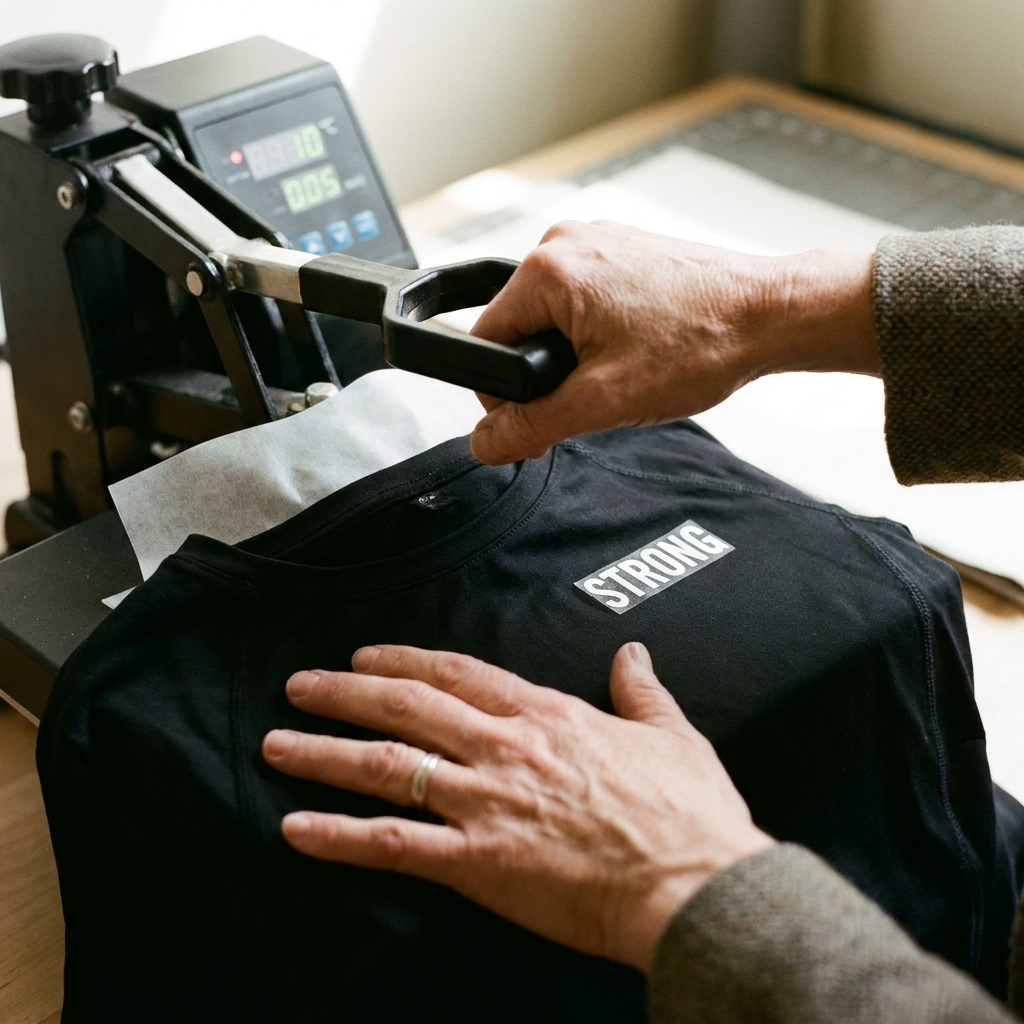
Picking a word you will still like
If you have ever made a shirt with a word that felt motivating on Tuesday and deeply cringe by Friday, you are not alone. My favorite test is simple: will you still like this word on a tired day?
Three quick filters
- Speakable: you should be able to say it out loud without feeling like you are impersonating a poster.
- Specific: “Strong” is fine, but “Steady” tells me how you want to show up.
- Actionable: the best mantra words are instructions you can follow mid-rep.
Word bank: one-word mantras
Choose one that matches the kind of energy you want in the room, or in your head during a hard set.
- STEADY (consistent over intense)
- BRAVE (do it scared)
- FOCUS (narrow your attention)
- GRIT (finish what you started)
- DRIVE (forward motion)
- RADIATE (confidence you can share)
- RISING (growth in progress)
- UNSTOPPABLE (big, bold energy)
- FEARLESS (classic, but still effective)
- RELENTLESS (for days you want edge)
- CAPABLE (quiet competence)
- RESILIENT (bounce back)
- DISCIPLINE (keep promises to yourself)
- POWER (simple and direct)
- WORTHY (gentle strength)
- ENOUGH (especially good for recovery days)
- CALM (for yoga, mobility, and breath work)
- GROUND (stability, presence)
- FIERCE (high-energy classes)
- ENDURE (stamina and patience)
If you want words rooted specifically in strength language, you may also like these powerful words that mean strength. They translate surprisingly well to athletic designs.
Design choices that hold up
Activewear is unforgiving. It stretches, it rebounds, it gets sweaty, and it is washed more aggressively than most tees. Your design needs to cooperate with all of that.
Keep it compact
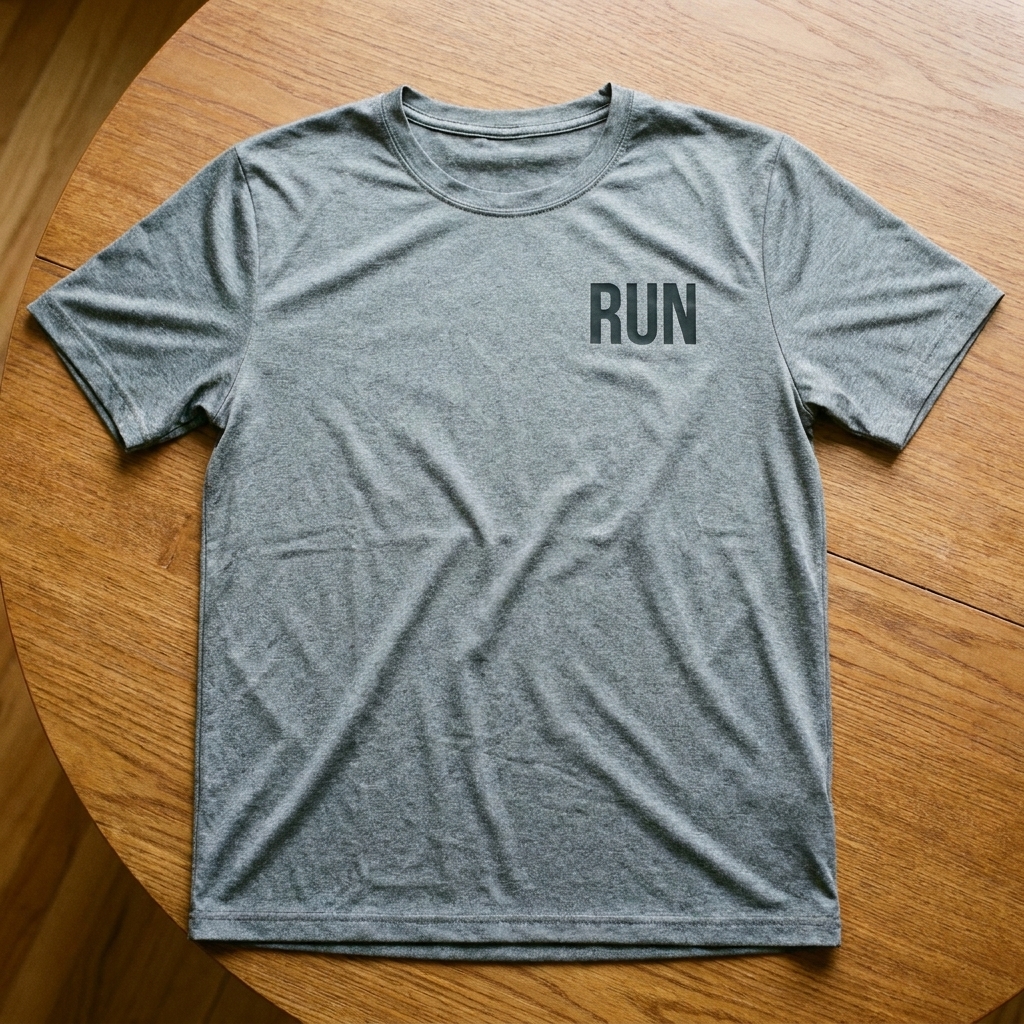
On stretchy shirts, big blocky designs are more likely to crack because they have more surface area fighting the fabric’s movement. A small left-chest word or a vertical word along the side seam tends to last longer and look more intentional.
Use a thicker font than you think
Super thin scripts can look gorgeous, but on textured performance knits they can sink and lose crisp edges. A clean sans serif, athletic block, or a sturdy serif usually weeds easier and sets cleaner.
Mind the stretch direction
Many workout knits stretch more side-to-side than up-and-down, but 4-way stretch fabrics can be equally stretchy in both directions. Either way, think about where the garment is under tension. If your word is wide and placed across the chest, it will be stretched constantly. If you love a wide word, consider placing it higher on the chest and not spanning too far toward the side seams.
Pick the right HTV finish
- Matte HTV: best for a printed look. It also tends to hide press marks better.
- Stretch HTV: made for athletic fabrics and high-spandex blends. If your shirt feels slick and snappy, this is your friend.
- Glitter or foil: can be stiffer. It works, but choose smaller designs and avoid high-stretch zones.
For more baseline Cricut lettering help (sizing, spacing, and making text look clean), see our Cricut lettering guide.
What you need
- Cricut machine and a cutting mat (StandardGrip is common, but use whatever grip works cleanly with your HTV carrier and keeps it flat)
- HTV suitable for stretch fabric if possible
- Weeding tool
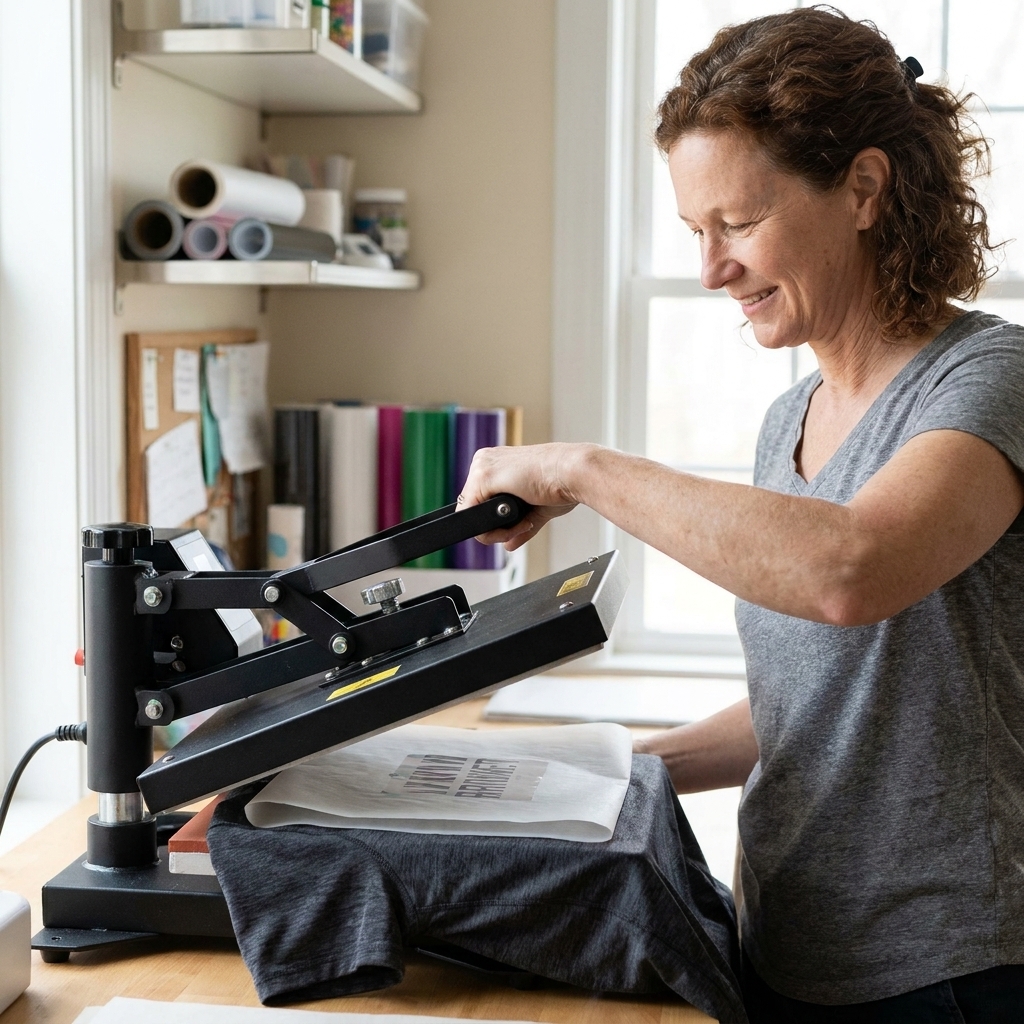
- Heat press or household iron (a press is easier for consistent pressure)
- Heat-resistant pressing mat or folded towel (avoid pressing on a hard, cold surface)
- The cover sheet your HTV brand recommends (many people use parchment paper or a Teflon sheet; avoid anything that can scorch at your press temperature)
- Lint roller
- Optional but helpful: heat-resistant tape for keeping small designs from shifting
Quick reality check: performance fabric blends vary wildly, and some garments have durable finishes that resist adhesives. Always follow the HTV brand’s temperature and time settings, and do a small test press if the garment is expensive, delicate, or unusually slick.
Step-by-step HTV on activewear
1) Pre-wash, then skip fabric softener
If the shirt is new, washing and drying it once often helps remove manufacturing residue that can interfere with adhesion. Fabric softener can leave a coating, so I avoid it for anything I plan to press (and I skip dryer sheets later, too).
2) Build your word in Design Space
- Type your word and choose a legible font.
- Size it with placement in mind. For left-chest designs, a helpful starting range is about 2.5 to 4 inches wide or roughly 1 to 2 inches tall, depending on the shirt size and the shape of the word.
- Mirror the design before cutting. HTV cuts in reverse because you flip it onto the fabric.
3) Cut and weed for flexibility
Cut your HTV shiny side down. Weed carefully, especially inside letters like A, R, and O. If your word is narrow, consider slightly increasing letter spacing so the design can flex without edges colliding.
4) Prep the shirt surface
- Use a lint roller where the design will go.
- Pre-heat the garment for a few seconds to remove moisture and wrinkles.
- Insert a pressing pillow, folded towel, or pressing mat inside the shirt so seams and tags are not creating uneven pressure.
5) Place the word, then apply firm, even pressure
Position the design, cover with your protective sheet, then press according to your HTV’s instructions. For activewear, pressure consistency matters as much as heat. If you are using an iron, keep it steady and press in sections with strong downward pressure rather than sliding.
6) Peel correctly, then do a quick finishing press
Some HTV is warm peel, some is cold peel. Follow the brand directions. After peeling the carrier sheet, I like a short finishing press (again with a protective sheet on top) to help the edges fully bond.
7) Let it rest before washing
Give the design at least 24 hours before washing. Then wash inside out. Cold is the safest bet for longevity. Skip fabric softener and dryer sheets, and avoid high-heat drying when possible.
Fabric notes
If you want HTV to last on athletic gear, this is the part to pay attention to. Two shirts labeled “polyester blend” can behave like totally different materials under heat.
- Very slick, shiny poly (Dri-FIT style): expect more resistance. Use stretch HTV, press on a very flat surface, and test a tiny area first. Some finishes are designed to be low-friction and durable, and they can fight adhesion.
- Ribbed or seamless knits: texture can make thin lettering look wavy. Choose thicker fonts, keep the design small, and use a pressing pillow so you get even contact without crushing seams.
- Brushed, buttery fabrics (legging-style tops): they can be heat-sensitive. Start at the low end of your HTV’s recommended range and test on an inside hem or an inconspicuous spot before committing.
Common problems
My HTV is peeling at the edges
- Cause: not enough pressure, uneven pressure over seams, or too low temperature.
- Fix: press again with firm pressure and a protective sheet. Make sure the area under the design is flat, not hovering over a seam.
It looks glossy around the word
- Cause: press marks from heat and pressure on synthetic fabric.
- Fix: use a pressing pillow, reduce press time if your HTV allows it, and choose matte or stretch HTV. A protective sheet helps, but placement and pressure are usually the bigger issue.
The word is cracking after a few wears
- Cause: design too large or too stiff for the fabric’s stretch, or HTV not suited for high-spandex garments.
- Fix: switch to stretch HTV, reduce design size, and avoid placing the design where the shirt is under constant tension.
The carrier sheet shifted and my word is crooked
- Cause: bumping the carrier when closing the press, or fabric moving on a slick surface.
- Fix: use heat-resistant tape to tack the carrier sheet in place. Also, pre-press the shirt so it lies flatter.
Placement ideas
- Left chest: subtle, classic, easy to rewear outside the gym.
- Upper back, centered: great for short words like BREATHE, DRIVE, FOCUS.
- Side rib area: looks sleek, but keep it smaller so it flexes with movement.
- Hem corner: tiny secret mantra placement, surprisingly satisfying.
- Sleeve: works well for short words and avoids high-stretch chest zones.
If you are the kind of maker who likes a clearer message overall, my piece on writing clear words for a small sign is sign-focused, but the same principle applies here: short space, high impact, no wasted syllables.
Mini FAQ
Can I use regular HTV on spandex workout shirts?
Sometimes, yes. But if the garment has a high spandex percentage and feels very stretchy and slick, stretch HTV is more reliable long-term. Regular HTV tends to work better when the design is small and not placed in a high-tension area.
Should I use the Cricut EasyPress or a household iron?
A press (EasyPress or a clamshell heat press) makes it easier to apply even pressure, which is a big deal on technical fabrics. An iron can work, but you need patience and very consistent pressure.
What is the best one-word mantra for motivation?
The best one is the word you will believe when you are tired. If you want a starting point that works for almost everyone, I reach for STEADY, BRAVE, or CAPABLE. They are strong without being performative.
How do I keep letters from looking wavy on knit fabric?
Choose a thicker font, pre-press the shirt so the surface is smooth, and make sure your pressure is even across the design. Also, avoid stretching the shirt when placing the carrier sheet.
A final word
My favorite one-word shirts are not the loudest ones. They are the ones that feel like a quiet agreement you made with yourself. Pick a word you can live inside, then set it like you mean it.
If you want more word-focused inspiration for maker projects, you can browse Word Meanings or explore Quotes and Sayings here on AllWords.