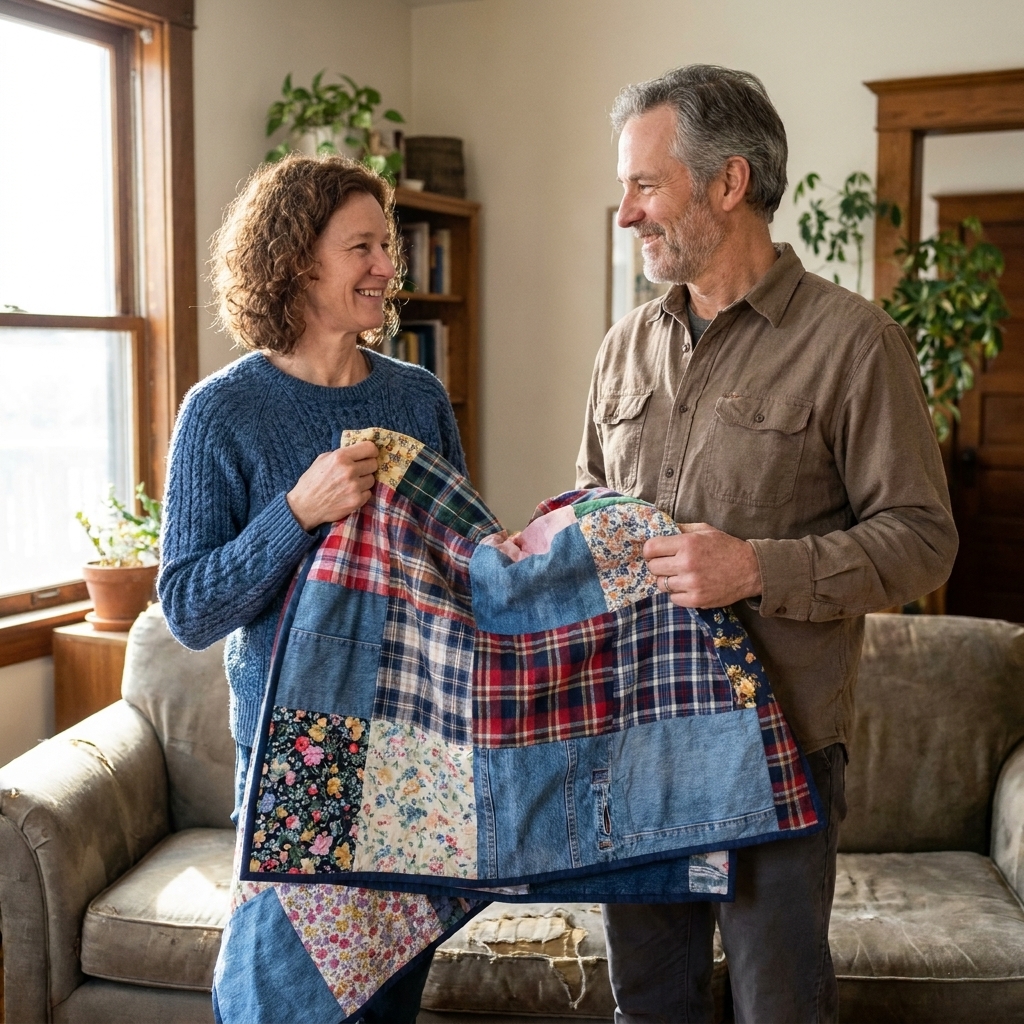

At the arts festivals I used to help organize, makers would hand me the sweetest stories in the form of objects: a quilt stitched from a father’s work shirts, a teddy bear made from a baby blanket, a cross-stitched wedding date tucked into a frame. And then they would pause at the same moment, pen hovering, and ask: “What do I even call this on the label?”
Most of the time, the word they were reaching for was keepsake. It sounds simple. It is simple. But it carries a whole pocketful of meaning that can make your dedication feel more intentional, especially for memory quilts and heirloom sewing projects.
Keepsake definition
A keepsake is an object you keep because it helps you remember someone, some place, or a season of life. The item might be small (a ticket stub) or substantial (a quilt), but the purpose is the same: it holds meaning beyond its material value.
If you want a quick working definition for craft labels, here is mine:
Keepsake (n.): something saved on purpose because it carries memory, affection, or personal history.
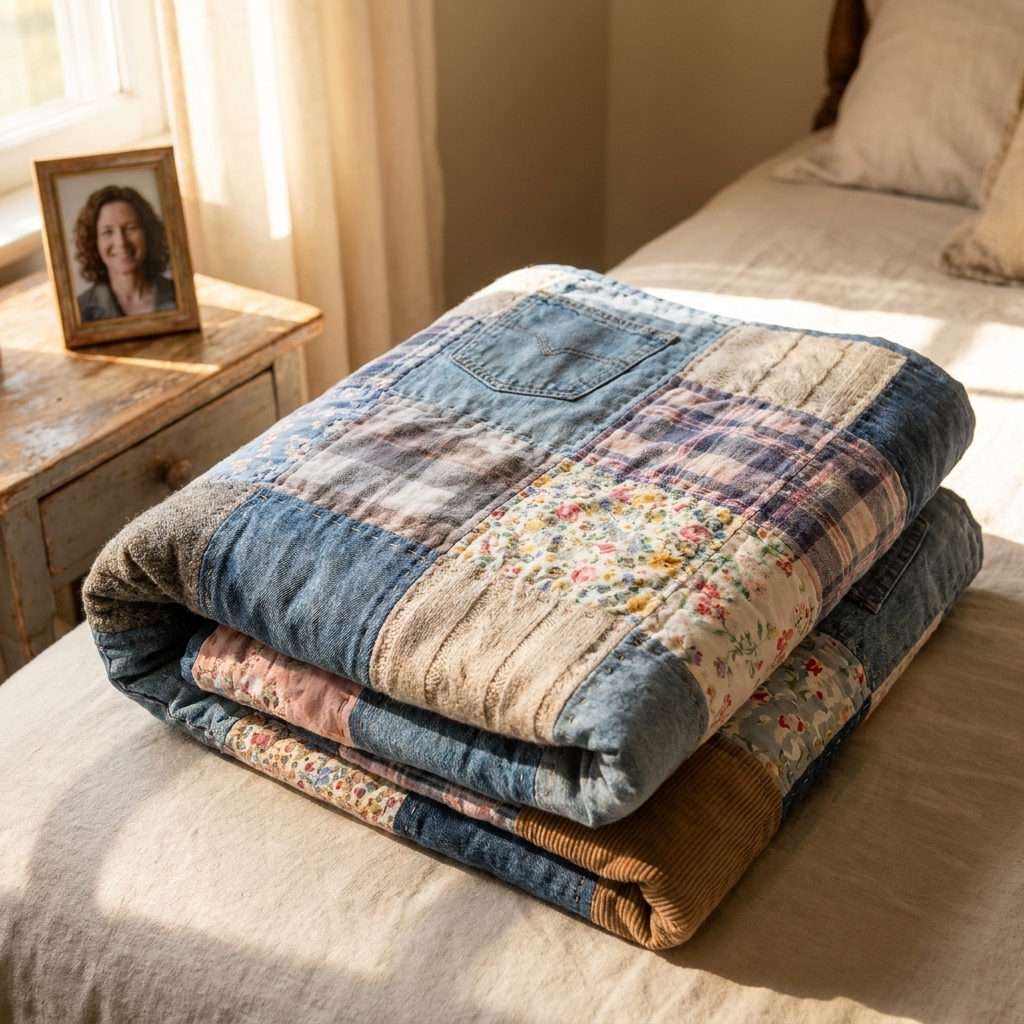
That “saved on purpose” part matters. A random old pillow is clutter. A pillow made from Grandma’s apron fabric, kept because it feels like her kitchen, is a keepsake.
Where the word comes from
Keepsake is built from two very domestic, practical words: keep and sake. In older English, for someone’s sake meant “for their benefit” or “out of regard for them.” Read that way, keepsake can suggest something you keep out of regard, attachment, or remembrance.
The noun keepsake is often traced, in print, to the late 1700s. In early uses, it appears in writing about gifts and small tokens of remembrance, the kind of object you hold onto because it ties you to a person when they are far away, or gone. That makes it a natural match for:
- Memory quilts made from clothing or linens
- Heirloom baby blankets made for a child to carry forward
- Wedding textiles meant to outlast the day itself
- Handmade ornaments that come out every year like a ritual
A keepsake does not have to be old to be real. It just has to be kept with intention.
Keepsake vs. heirloom vs. memento
These words overlap, and that is why they are easy to mix up on a tag or dedication card. Here’s a simple way to tell them apart.
Keepsake
Best when: the focus is emotional value and personal memory.
- Often connected to one person or relationship
- Can be everyday materials transformed into meaning
- Does not require age or “antique” status
Heirloom
Best when: the focus is passing down across generations.
- Family lineage is part of the point
- Often described with words like handed down, legacy, for future generations
- Usually implies durability and long-term care
Memento
Best when: the focus is a specific event, place, or milestone.
- Feels like “proof I was there” or “a piece of that day”
- Often tied to travel, ceremonies, graduations, weddings
Souvenir
Best when: it is acquired to remember a place or trip, often purchased.
- Not always deeply personal, but can be
- More about location than relationship
Any of these can overlap. Choose the word that matches the story you want the label to tell.
If you are labeling a quilt made from a loved one’s clothes, keepsake tends to be the warmest and most accurate. If you are writing for the future grandkids too, combine terms: “an heirloom keepsake quilt.”
What makes a keepsake?
When you are trying to decide whether the word fits, look for these tells. A keepsake usually has at least two or three:
- Story: a specific person, moment, or meaning is attached.
- Chosen permanence: it is saved intentionally, not accidentally.
- Emotional spark: seeing or touching it brings someone back to mind.
- Ritual of care: it gets boxed carefully, displayed, repaired, or protected.
- Link between people: it is often made, given, or kept as an act of love.
Memory quilts check every box. They are story-rich by nature, and they invite care: washing gently, storing safely, mending rather than replacing.
Using “keepsake” on labels
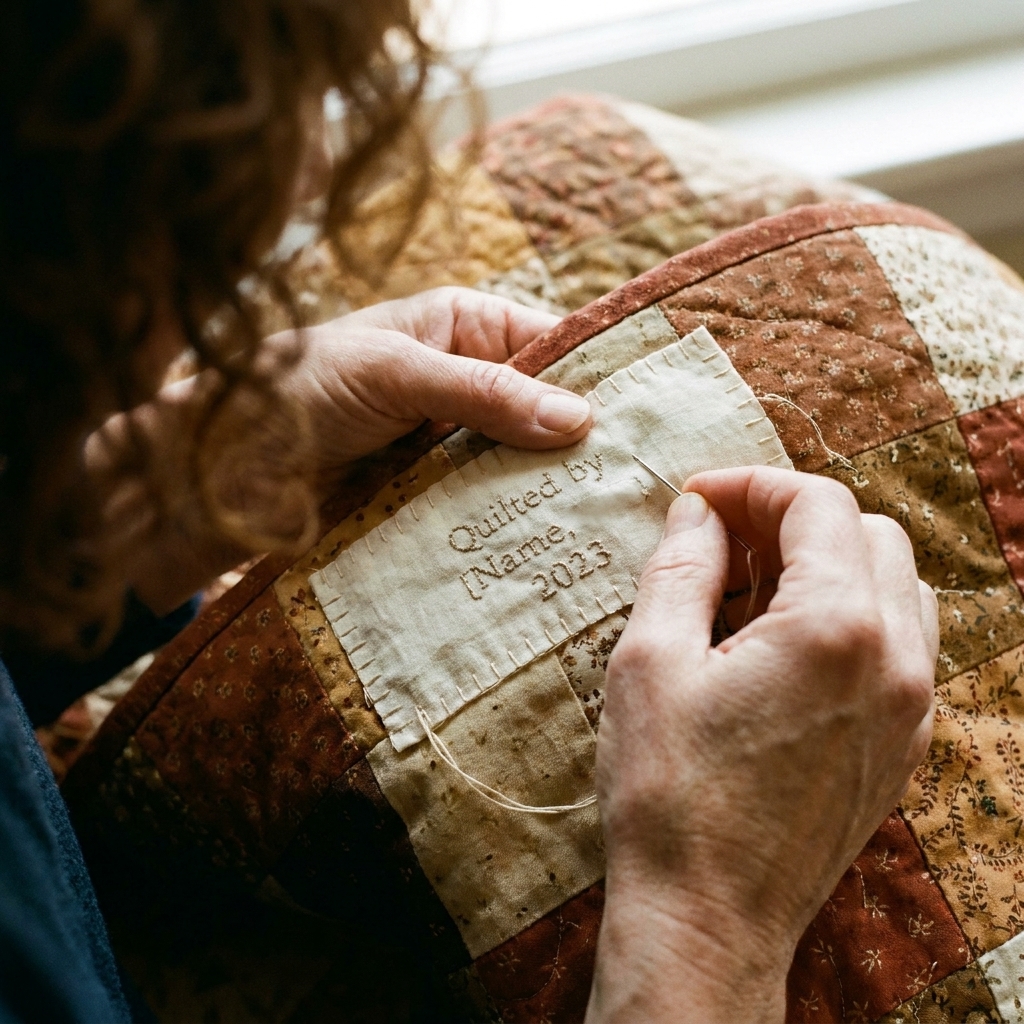
When you put keepsake in writing, you are making a promise: this object is meant to stay. So the best label wording is specific enough to anchor the memory, but simple enough to feel timeless.
If you have room, a few practical details can make the keepsake easier to hold onto over the years: the maker’s name, the date, the place (optional), and basic care notes. Keep it short. The goal is clarity, not a novel.
Short label lines
- “Keepsake Quilt”
- “Memory Keepsake”
- “A Keepsake for Sarah”
- “Made as a keepsake of Grandpa Joe”
- “Stitched for remembering”
Dedication examples
- “Made from your shirts, so your hug can stay.”
- “A keepsake quilt in loving memory of Elena.”
- “May this quilt keep your stories close.”
- “Pieced with love, kept with love.”
- “From the days we wore out together, to the days we remember.”
If you are unsure how much to say, I like this rule: include who, what materials (optional), and why it exists (love, memory, comfort). Even one clear sentence can do it.
For more help writing small, meaningful text that fits a tag or label, you might like Write Clear Words for a Small Sign. The examples are about signs, but the same “small space, big meaning” challenge applies to quilt labels.
Memory quilt wording
Sometimes “keepsake” is perfect, but the rest of the sentence goes sentimental in a way that does not match your voice. Here are a few language swaps that keep the feeling without the sparkle.
Steadier verbs
- keep (simple, strong)
- hold (tender without being sugary)
- carry (good for grief and legacy)
- remember (direct and honest)
- return (evokes comfort: “return to this when you need”)
Grounded nouns
- memory
- comfort
- home
- story
- love (still the classic for a reason)
Example shifts:
- Instead of: “A keepsake full of magical memories.”
Try: “A keepsake quilt made to hold your memories.” - Instead of: “Forever in our hearts.”
Try: “Kept close, always.”
FAQ
Does a keepsake have to be a gift?
No. Many keepsakes are gifts, but plenty are made or kept for yourself. A memory quilt you sew during grief can be a keepsake even if it never leaves your home.
Is a keepsake always connected to someone who has died?
Not always. Keepsakes can be joyful and present-tense: a quilt made from a child’s baby clothes, a wedding handkerchief, or a graduation blanket can be keepsakes long before they are connected to loss.
Can something be both a keepsake and an heirloom?
Yes, and that is often the goal with heirloom-quality sewing. Keepsake describes the emotional purpose. Heirloom describes the intended lifespan and passing-down. Together they tell the full story.
What if I do not know the future owner?
Write to the object itself. Labels like “Made to be kept” or “A quilt for remembering” still communicate intention, even when names and dates are unknown.
A keepsake is a decision
My favorite thing about the word keepsake is that it sounds like what it is: something kept, out of regard, on purpose.
When you add it to a memory quilt label, you are not just naming the object. You are naming the role it will play in someone’s life: comfort on a hard day, a story told again, a person remembered in fabric and thread.
If you want to explore more language like this, start with Word Meanings. That is where I keep the definitions that help makers write like humans, not product catalogs.