

At the arts festivals I helped organize in my twenties, I watched the same small drama play out at booth after booth: a maker would have gorgeous work, a line of interested people, and then one sticky moment when someone asked, “So is this bespoke… or just handmade?”
That “just” always made me wince. Not because bespoke is bad, but because language quietly sets expectations. The word on your label does two jobs at once: it tells the truth about how you made the item, and it tells the customer what kind of collaboration (and price) they should anticipate.
Let’s sort out what bespoke, custom, and handmade actually mean in plain terms, along with the connotations each one carries in the real world of markets, Etsy listings, studio orders, and packaging.
Quick definitions
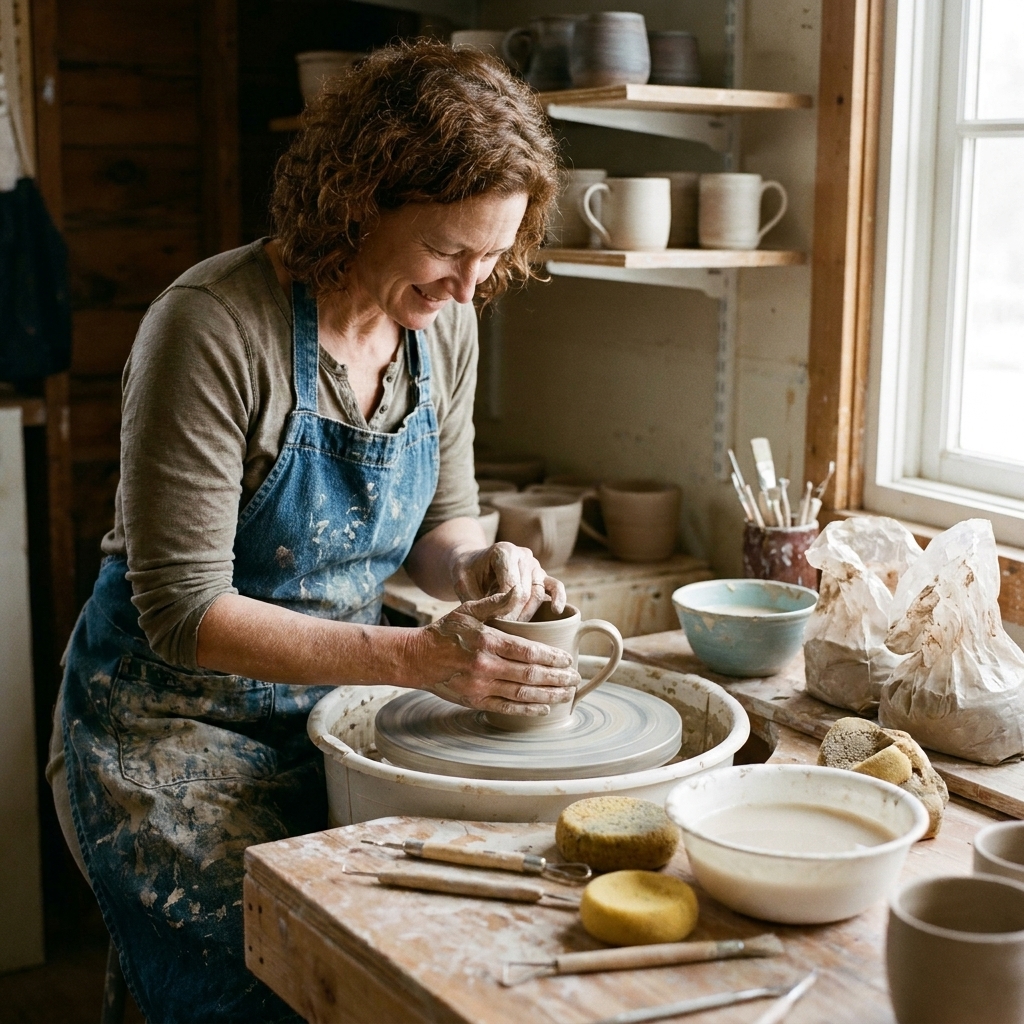
- Handmade: made by hand (fully or substantially), with human skill and variation. It can be one-of-a-kind or repeated from the same design.
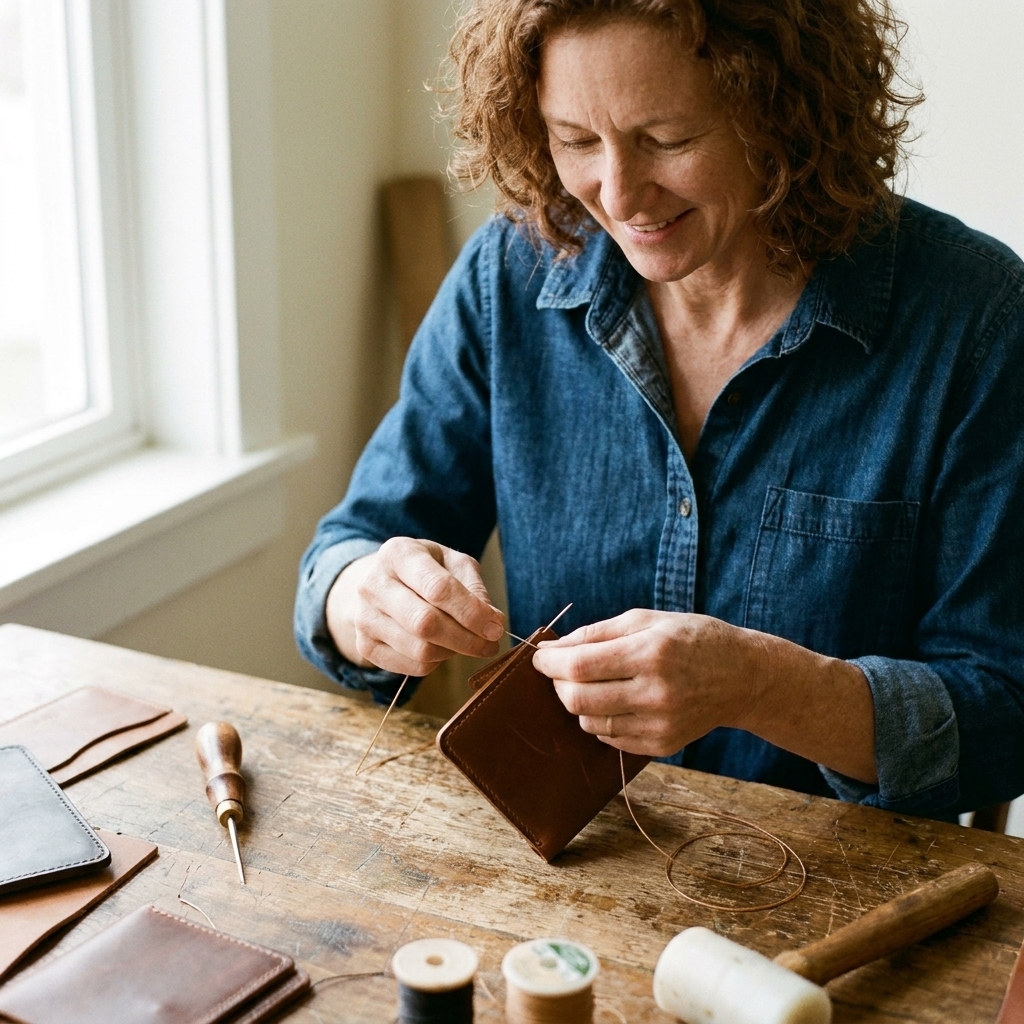
- Custom: made to a customer’s chosen specifications, often from a set of options. It implies choice, not necessarily a from-scratch design.
- Bespoke: made for an individual customer and significantly tailored to them, typically through a consultative process. It implies a high level of tailoring and collaboration, even when you start from an existing design or pattern.
If you only read one paragraph, let it be this: handmade describes how it’s made, custom describes who it’s for, and bespoke describes how deeply it’s tailored.
What “handmade” promises
Handmade is the broadest of the three words, and it is often the safest, clearest label for maker businesses. At its best, it signals: human hands, real materials, a practiced process, and slight natural variation.
Handmade usually implies
- A person is doing the core shaping, assembling, painting, carving, stitching, pouring, glazing, or finishing.
- The item may be made from a repeated pattern or design, but the result is not factory-identical.
- Small “maker marks” are normal: grain changes, dye lots, tiny asymmetries, brushstroke texture.
Handmade does not automatically mean
- One-of-a-kind.
- Customizable.
- Luxury priced.
- Made without any tools or machines. Many handmade processes responsibly use machines for a step or two.
Your labor can still be worth luxury pricing. The label just does not guarantee customers will assume it.
Label tip: If you worry that “handmade” sounds too plain, pair it with a clarifier that names your real value: “handmade in small batches,” “handmade using traditional joinery,” “handmade and hand-finished,” or “handmade from locally milled wood.”
For more language like this, the Word Meanings guide is where I collect these tiny-but-mighty distinctions.
What “custom” promises
Custom is about customer-directed choices. The item is made for a particular person, but usually within a framework you already offer.
Custom often looks like
- Choosing color, size, fabric, scent, hardware, or finish from a menu.
- Adding a name, date, or short phrase.
- Adjusting dimensions within an existing design (for example, “same sign layout, but 24 inches wide instead of 18”).
- Combining preset elements (choose-your-own stone for a ring, pick a charm set for a bracelet).
Custom can be handmade, but it does not have to be
This is where labels get slippery. You can have:
- Custom + handmade: a hand-thrown mug in a customer’s chosen glaze color.
- Custom + manufactured: a factory-made item with a personalized engraving.
If you make the item yourself, you can absolutely say both. In fact, using both terms often prevents confusion: “Custom, handmade to order.”
When “custom” is the right label
Use custom when you want to invite a customer into a choice process, but you do not want to imply a blank canvas. Custom says, “You can pick from options.” It does not promise, “Bring me any idea and I will redesign my whole workflow for it.”
What “bespoke” promises
Bespoke is the most specific and the most loaded with expectation. Traditionally rooted in tailoring, it implies an item made specifically for one client, shaped around their needs, and typically requiring direct consultation. In many industries, bespoke work may start from a house style or base pattern and then be cut, adjusted, and refined for the individual.
Bespoke usually implies
- A collaborative process that begins with the customer, not just your catalog.
- Decisions driven by fit, function, or personal preference, not only aesthetics.
- Higher touch communication: consults, drafts, iterations, test fitting, sampling, or prototyping.
- More one-off problem solving and therefore a higher price point.
In day-to-day maker language, “bespoke” also carries a strong connotation of luxury. People often hear bespoke and assume premium materials, extra time, and a white-glove experience.
When “bespoke” fits
- A woodworker designing a built-in shelf system to fit a specific wall and storage need.
- A jeweler creating a ring around a client’s heirloom stone, built to their hand measurements.
- A ceramicist developing a new form for a restaurant’s plating needs after testing samples.
- A sign maker planning layout and proportions for a particular space, with proofs and revisions.
A gentle caution: If you use “bespoke” on a label but your process is actually “choose from three fonts and two colors,” customers may feel misled even if the product is beautiful. Bespoke is less about how impressive the finished object is and more about how individualized the process was.

Choose the right term
When I’m helping makers polish their wording, I ask three questions. Your answers tell you which term belongs on your packaging, hang tags, and listings.
1) Are you making it by hand?
- If the core work is done with your hands and skill: handmade belongs somewhere.
- If the core item is manufactured and you add personalization: lean toward custom or personalized (and be clear about what you do yourself).
2) Options or one-off?
- Options menu: custom.
- Commission with consultation and meaningful tailoring: bespoke.
3) Revisions and approvals?
- No revisions, customer chooses options and you make it: custom (and possibly handmade).
- Yes, iterative design is part of the service: bespoke.
If you sell in person and need short signage language, you may also like my guide on keeping phrasing tight: Write Clear Words for a Small Sign.
Comparison table
| Term | What it describes | Customer expectation | Best for | Common label add-ons |
|---|---|---|---|---|
| Handmade | Method: made by human hands | Craft, variation, care | Batch products, artisan goods, studio work | “hand-finished,” “small batch,” “made in-house” |
| Custom | Specification: made to chosen options | Choice and personalization | Made-to-order items with defined selections | “made to order,” “choose your color,” “personalized” |
| Bespoke | Process: individually tailored, consultative | High-touch collaboration and premium | Commission work, fit-driven or space-specific pieces | “commissioned,” “designed with you,” “one-of-one” |
Common edge cases
“I designed it, but it’s produced by a manufacturing partner.”
If you are not physically making the item, “handmade” may not be the clearest word for a label. Consider language like:
- “Original design by your brand name”
- “Designed in-house”
- “Designed by me, made in partnership with a small production studio”
That last option is longer, but it is honest, and honesty scales.
Listing disclosure examples
If you want one sentence that prevents confusion without derailing your listing, these are the kinds of lines that work well:
- “Designed by me, produced by a trusted manufacturing partner, then inspected and packaged in my studio.”
- “I create the artwork and layout; production is handled by a small partner shop to ensure consistent print quality.”
- “Made to order with my design, shipped directly from my production partner to reduce waste.”
“I make them the same way every time, but each one varies.”
That is classic handmade. Your label can be as simple as “handmade,” or more specific: “handmade, each piece unique.”
“Customers can request a totally different style if they ask.”
If you truly accept one-off requests and will redesign, prototype, or iterate, bespoke may fit. If you only do it occasionally and prefer to steer customers back to your catalog, I would keep your public label to custom and reserve bespoke language for specific commission conversations.
“I personalize names. Is that custom?”
Often yes. “Personalized” is sometimes even clearer than “custom” for name additions because it tells customers exactly what changes: the text, not the design structure.
Label-ready phrases
If your brain freezes the moment you have to put your process into six words, you are not alone. Here are a few phrases that tend to set the right expectations without sounding stiff.
For handmade items
- “Handmade in small batches”
- “Handmade and hand-finished”
- “Handmade with traditional techniques”
- “Handmade, each piece naturally unique”
For custom items
- “Custom made to order”
- “Custom colors and finishes available”
- “Personalized with your name or date”
- “Custom sizing by request”
For bespoke work
- “Bespoke commission, designed with you”
- “Bespoke fit and materials selection”
- “Bespoke build for your space”
- “Bespoke, one-of-one process”
One small wording move I love: if you use “bespoke,” add one clarifying phrase about the process (“designed with you,” “for your space,” “commission”). It keeps the word from floating off into vague luxury fog.
Mini FAQ
Is bespoke always handmade?
In many markets, bespoke implies hands-on craft, but the core promise is individual tailoring and consultation. If parts are machine-assisted, bespoke can still be accurate if the item is truly built around an individual client and not just lightly personalized.
Can something be both custom and handmade?
Absolutely. “Custom, handmade to order” is one of the clearest combinations you can put in a listing or on a product card.
Does “handmade” mean I cannot use any machines?
No. Many makers use machines for specific steps (cutting, sanding, sewing seams, firing kilns) while the creative and skilled work remains human-led. If you want to be extra clear, “handmade and hand-finished” communicates that your hands are present at the most important moments.
What if I am worried about legal definitions?
I cannot give legal advice, and rules vary by platform and region. When in doubt, choose the word that a reasonable customer would consider accurate after seeing your process. If you want to keep your terms consistent across your shop, build a short “what we mean by…” paragraph for your About page.
If you are refining your brand language overall, you can also browse the site-wide Word Meanings guide for other terms that affect expectations (like “artisan,” “original,” “heirloom,” and “vintage”).
The best label fits your process
These three words are not a hierarchy, even though people sometimes treat them like one. Handmade is not a lesser option than bespoke. Custom is not a vague fallback. They are simply different promises.
If you pick the term that matches how you actually work, your customers will feel it. The right word reduces back-and-forth, supports your pricing, and attracts the kind of buyers who appreciate what you do. That is not marketing fluff. It is just what happens when language and craft line up.