

I have a soft spot for wedding guest books, especially the handmade ones. A guest book is one of the few wedding details that can stay in your home afterward, quietly doing its job for years. That is why the words on the cover matter. You are not just decorating a book. You are setting the tone for how people step into your day, and how you will remember it when you open those pages later.
The big choice usually comes down to this: do you want a classic love quote (timeless, lyrical, a little formal) or a modern saying (clean, direct, often playful)? Neither one is better. The right one is the one that matches the couple’s aesthetic and the object itself, from the paper to the binding.
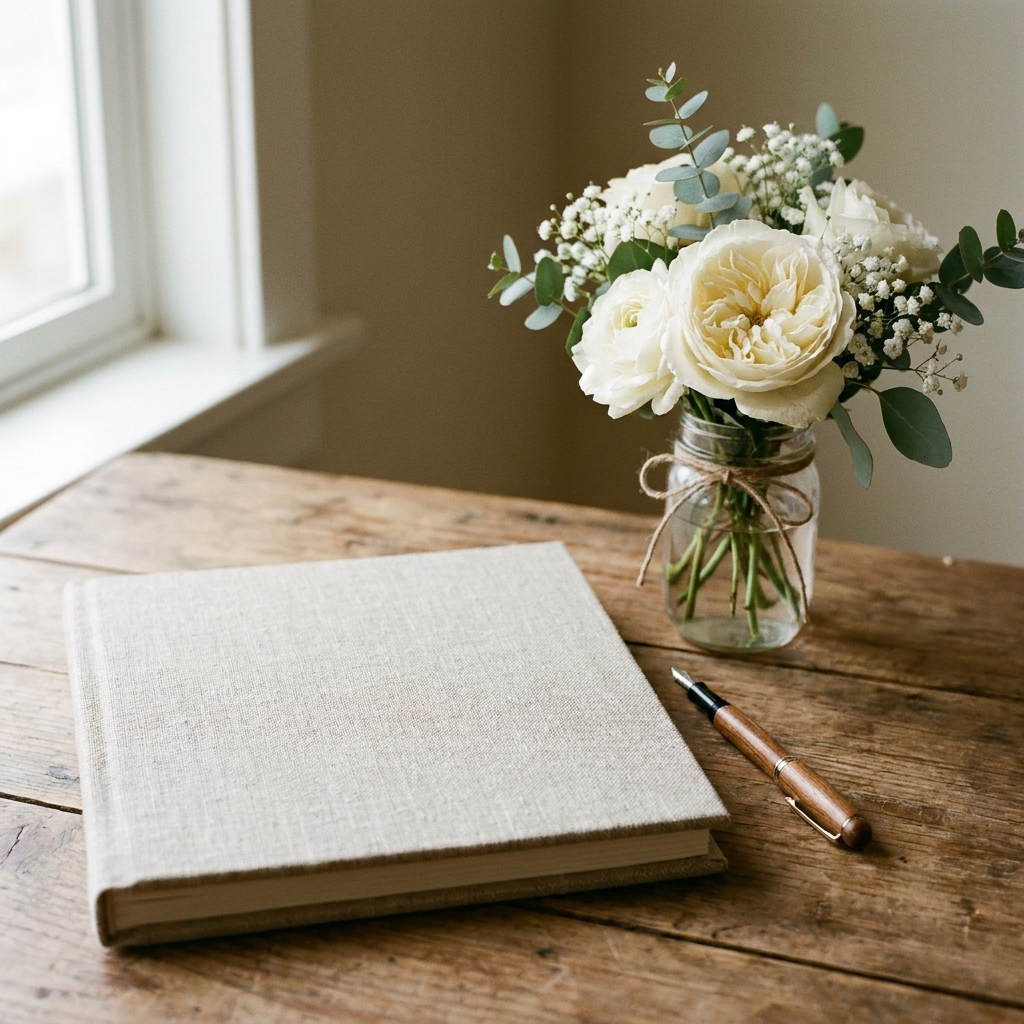
Classic vs. modern on a cover
Classic quotes
Classic love lines tend to feel:
- Poetic (imagery, elevated language)
- Timeworn in a good way (they sound like they have lasted)
- More formal (especially if you include an author line)
- Inviting to read slowly (people pause, then smile)
They pair beautifully with letterpress, calligraphy, deckle-edge paper, wax seals, satin ribbons, heirloom bindings, and any design that leans vintage or ceremonial.
Modern sayings
Modern love lines tend to feel:
- Plainspoken (shorter words, fewer flourishes)
- Present-tense (about choosing, building, growing)
- More you-specific (room for inside jokes, shared values)
- Design-forward (large type, plenty of negative space)
They match minimalist covers, contemporary typography, acrylic or leatherette albums, clean foil stamping, and weddings where the vibe is warm, unfussy, and personal.
Start with the book
Before you fall in love with a line from a poem, check the physical constraints. The object decides a lot.
Three practical questions
- How much space do you truly have? A narrow spine or small cover panel wants fewer words.
- How will the words be made? Burning, embossing, foil, vinyl, paint, and engraving all behave differently with long quotes and delicate punctuation.
- How close will people stand when they read it? A cover read up close can handle finer detail. A sign-in table book that’s often viewed at a glance wants bolder, simpler phrasing.
A simple length guide
- 2 to 6 words: spines, small foil stamps, narrow cover windows, monograms
- 6 to 14 words: most full covers (still readable at arm’s length)
- 14+ words: better on the inside title page, or split across cover and first page
If you are lettering the cover yourself, you might like my Cricut-focused guidance for spacing and readability: Cricut lettering guide.
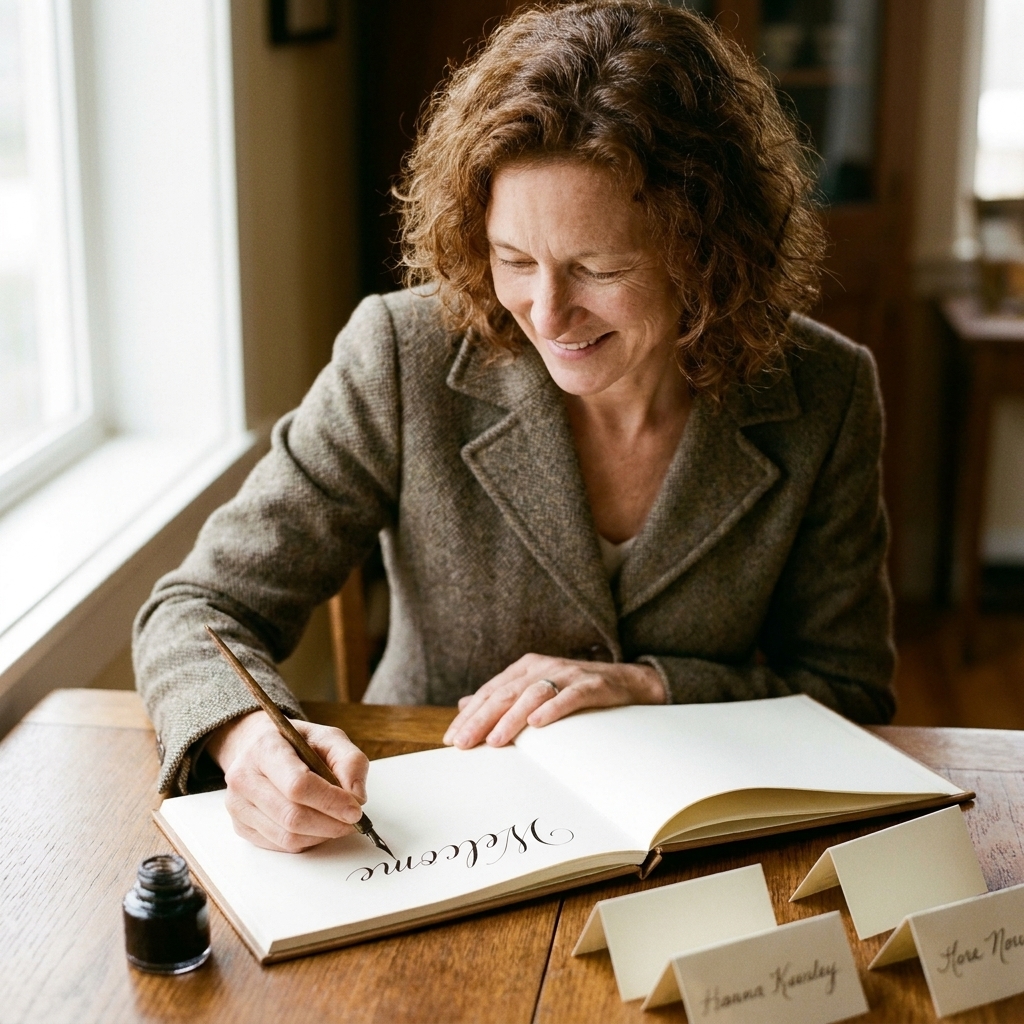
Classic quotes (with sources)
For guest books, I look for classic lines that are warm rather than tragic, and that do not require a full stanza to make sense. If you use a well-known line, I recommend double-checking the exact punctuation and capitalization in a reliable edition. Many couples also choose a cover-friendly adaptation, which is lovely, as long as you label it honestly.
Traditional and widely loved
- “Whatever our souls are made of, his and mine are the same.” Emily Brontë (from Wuthering Heights)
- “I carry your heart with me (I carry it in my heart).” E. E. Cummings (often adapted for covers)
- “Grow old along with me! The best is yet to be.” Robert Browning
- “Love is composed of a single soul inhabiting two bodies.” Aristotle (common English rendering; translation varies)
- “Where there is love there is life.” Mahatma Gandhi (commonly attributed)
When classic is the better match
- Your aesthetic is romantic or antique. Think soft florals, lace, candlelight, old-world venues.
- Your materials are tactile and traditional. Linen, raw silk ribbon, cotton paper, wood covers.
- You want the guest book to feel like an heirloom. Classic language naturally signals “keepsake.”
If you are building a guest book as a lasting object, you may enjoy: What makes a keepsake?
Modern sayings
Modern does not have to mean trendy. The best modern guest book lines are simple, steady, and specific. They read like a promise, not a punchline.
Clean and current
- “Today, and every day.”
- “Still falling. Still choosing.”
- “Built with love.”
- “A lifetime, one day at a time.”
- “You are my favorite place.”
- “Together is our best thing.”
Modern, not too casual
If you want contemporary warmth without slang, try lines that use everyday words but avoid internet-y phrasing. A guest book cover is not a text message. It is closer to a dedication page.
When modern is the better match
- Your design is minimal. Clean type, lots of negative space, a simple border, or no border at all.
- The couple’s vibe is direct and grounded. Less poetry, more this is real life and we love it.
- You want the message to feel very personal. Modern phrasing leaves room for your own voice.
Match the quote to the vibe
When I am helping makers choose wording, I use a quick mental checklist: era, texture, and tone.
1) Era
- Victorian, Art Deco, old library: classic quotes, maybe an author line
- Mid-century, gallery, modern garden party: modern sayings, often no attribution on the cover
- Rustic, farmhouse, outdoors: either works, but keep it plain and warm
2) Texture
- Velvet, linen, handmade paper, woodgrain: classic lines look natural here
- Acrylic, sleek leather, smooth matte cover: modern lines match the clean finish
3) Tone
- Hushed and ceremonial: classic verse
- Joyful and welcoming: modern warmth, or a short classic line
- Playful: modern, but keep it legible and kind
- Deeply intimate: either, as long as it sounds like the couple
If you want help naming the emotional tone, I wrote about a similar distinction here: Joy vs. happiness.
Hybrid wording
My favorite solution for handmade guest books is often a hybrid: you keep the timeless meaning, but you phrase it in simple, present-day language. It reads beautifully in modern typography, and it still feels like it will age well.
Classic heart, modern voice
- Classic idea: devotion. Modern phrasing: “Always you.”
- Classic idea: lifelong partnership. Modern phrasing: “For all the years ahead.”
- Classic idea: shared home. Modern phrasing: “Where we begin, together.”
- Classic idea: fate and finding. Modern phrasing: “I found you, and I choose you.”
These are also easier to fit on covers, which is not a small thing if you are working with a limited stamping plate or a Cricut cut size.
Quote use and permissions
A quick practical note, since guest books often get printed, engraved, or sold through a maker: not every beautiful line is free to use.
- Public domain generally means you can use the text without permission. Many older works fall here, but rules depend on country and edition.
- Modern writing and song lyrics are often copyrighted, even if the quote is short. Lyrics are especially risky for commercial work.
- The safer path is either to use your own original wording (modern sayings are perfect for this) or to use a public-domain quote and include an attribution line.
- If you adapt a line, treat it like an adaptation. You can still credit the author, but avoid presenting it as a verbatim quotation.
Design tweaks
You can take the same sentence and make it feel classic or modern with styling.
Make it feel more classic
- Add an author line in smaller type (when you are using a real quotation)
- Use a script or serif typeface
- Use title case more often
- Keep punctuation, including commas and semicolons, if the quote is known for it
Make it feel more modern
- Move the author line off the cover and onto the first inside page
- Use sans serif type
- Use all lowercase thoughtfully (only if it matches the overall design)
- Shorten to the emotional core, as long as you are not misquoting someone
For any signage or cover lettering, I always recommend reading it from three distances: close up, an arm’s length, and from across the room. If it disappears at arm’s length, it needs fewer words or bolder letterforms. More on clarity here: Write clear words for a small sign.
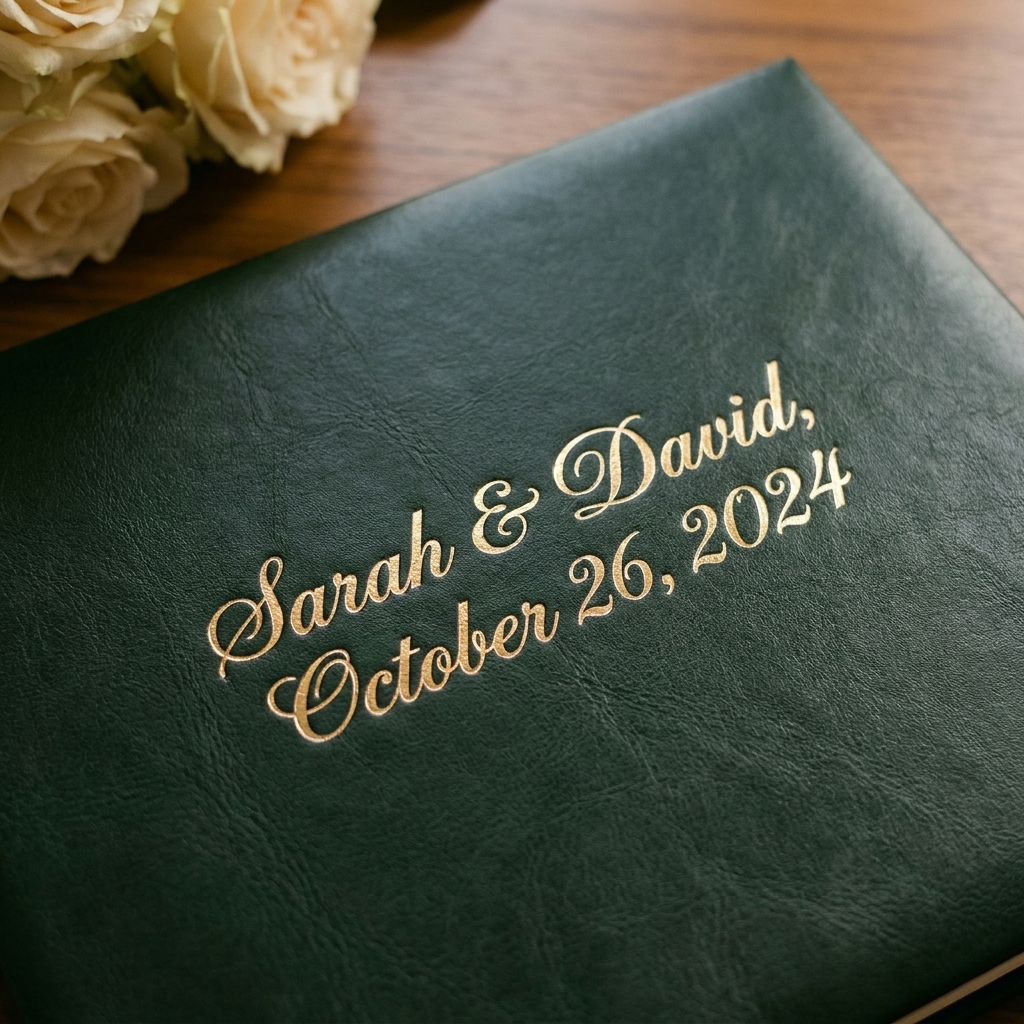
Avoid generic wording
If you are worried your quote feels like something everyone has seen, do not panic. You can make a well-known line feel personal by pairing it with a detail that belongs only to this couple.
Three gentle ways to personalize
- Add a date and place. A small line inside the cover, like “October 12, 2026, Asheville.”
- Use a two-part layout. Front cover: short line. Inside first page: longer excerpt or dedication.
- Choose a value word that anchors the quote. Words like “steadfast,” “tender,” “rooted,” “devoted” can steer the tone.
If you like building around one strong word, you may enjoy browsing: Word meanings.
Quick picker
- Pick classic if your wedding leans formal, vintage, romantic, or literary, and your cover has room for a longer line.
- Pick modern if your wedding leans minimalist, contemporary, playful, or design-forward, and you want something readable at a glance.
- Pick hybrid if one partner loves tradition and the other wants simplicity. It is the easiest compromise that still feels intentional.
Lines made for guest books
If you want something that explicitly welcomes signatures and messages, these are built for the function of the object while still feeling like a keepsake:
- “Leave your name and a wish for our life together.”
- “Your words are part of our story.”
- “Sign in with love.”
- “A note for the years ahead.”
- “Thank you for being here.”
More quote ideas live in our hub: Quotes and sayings guide.